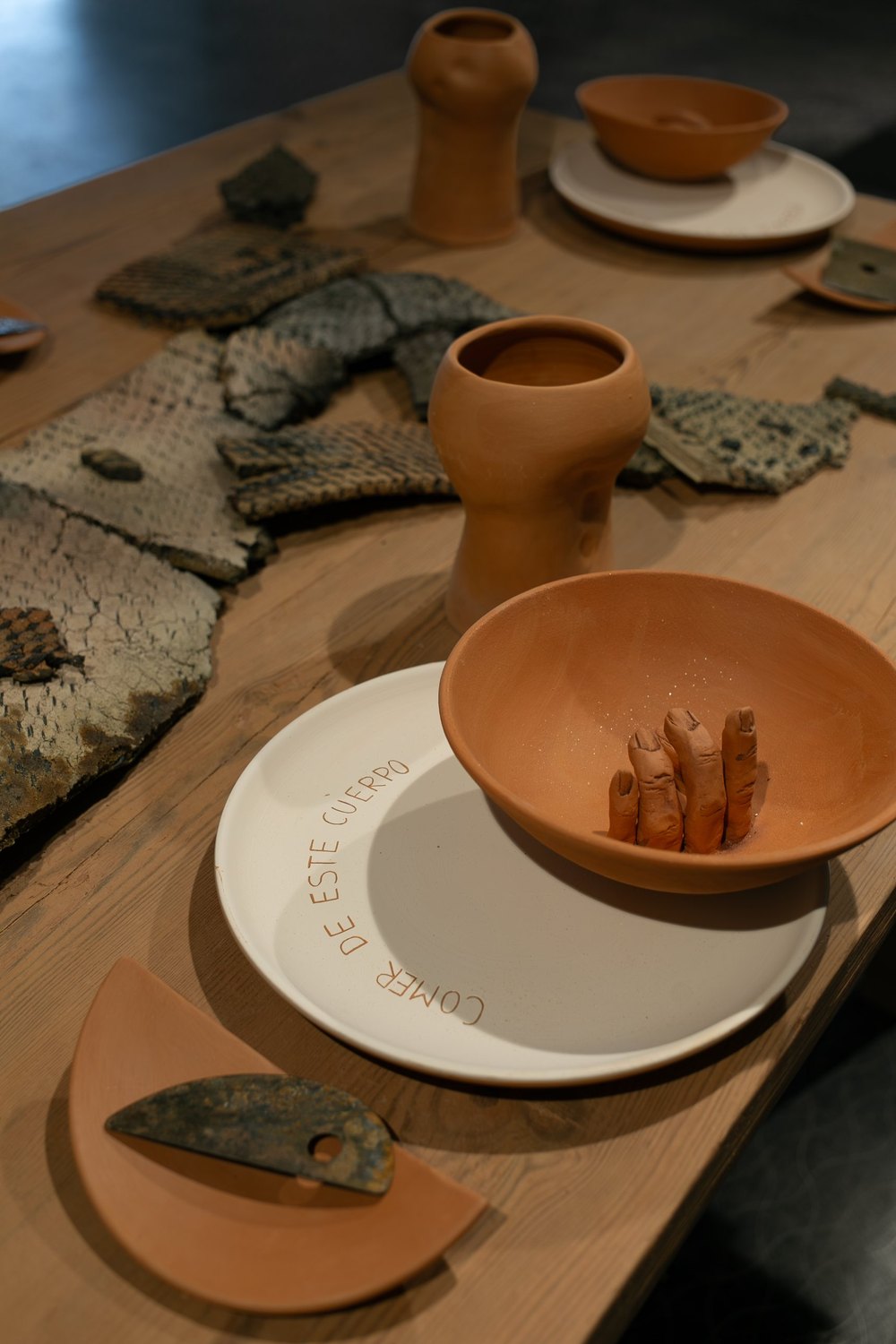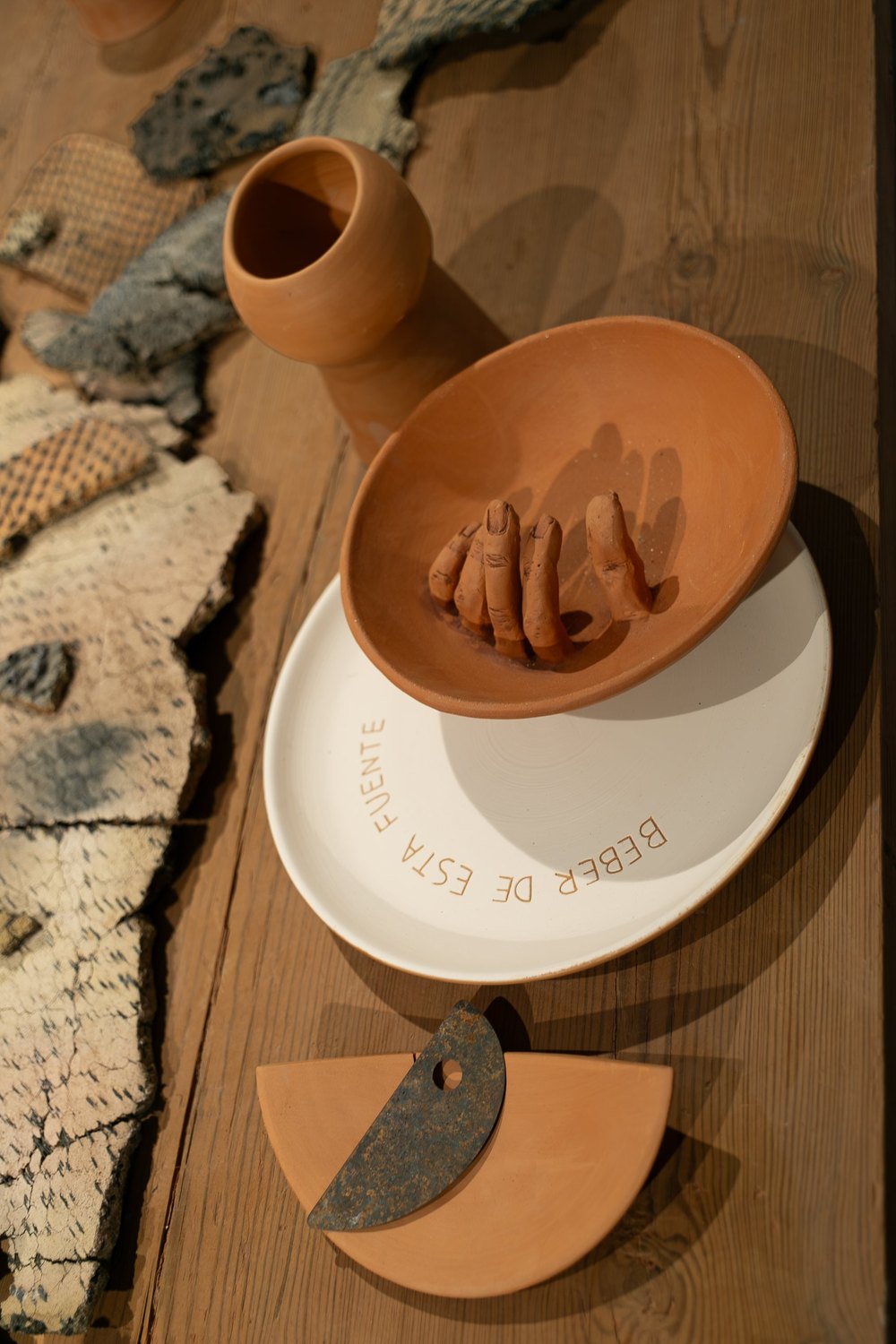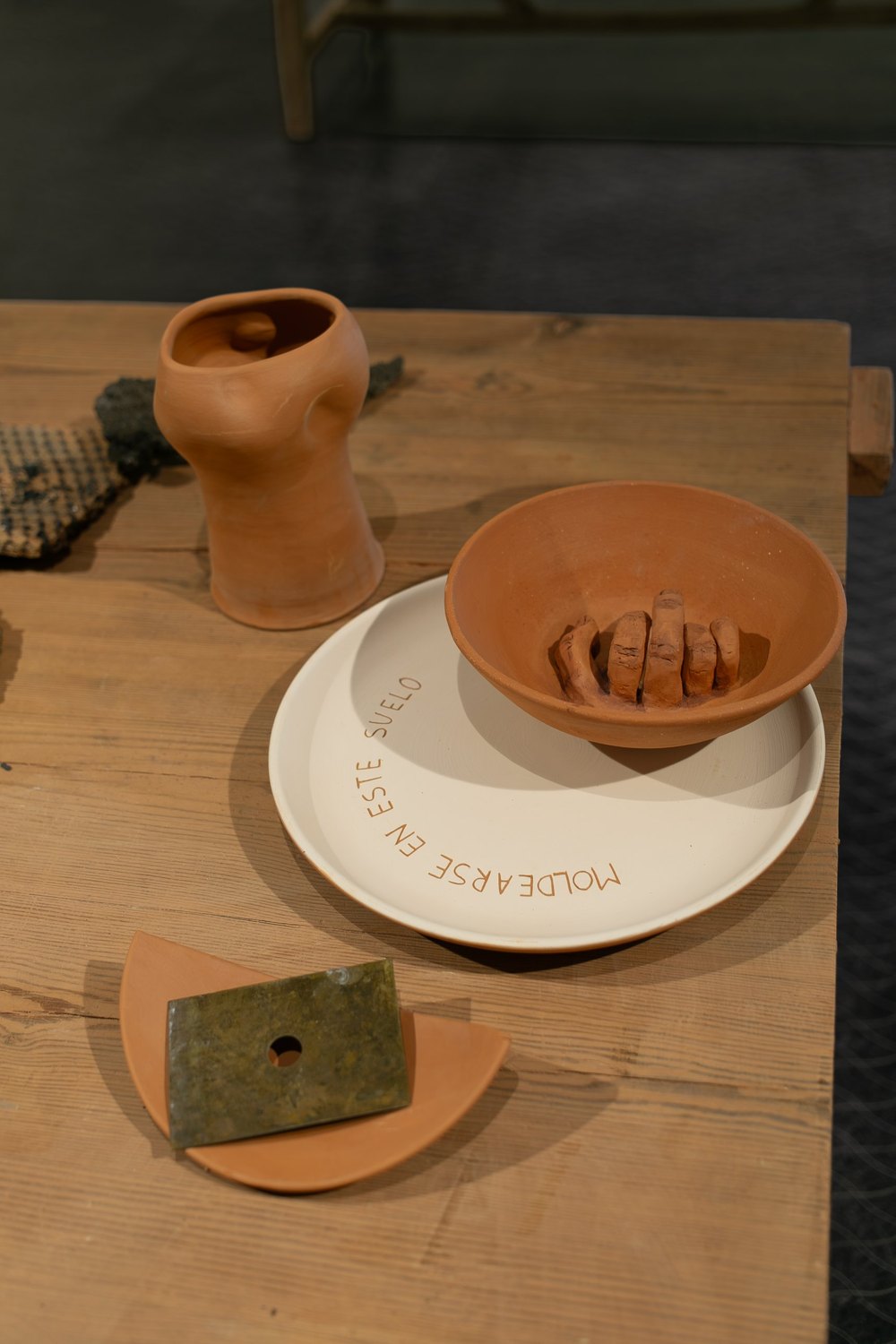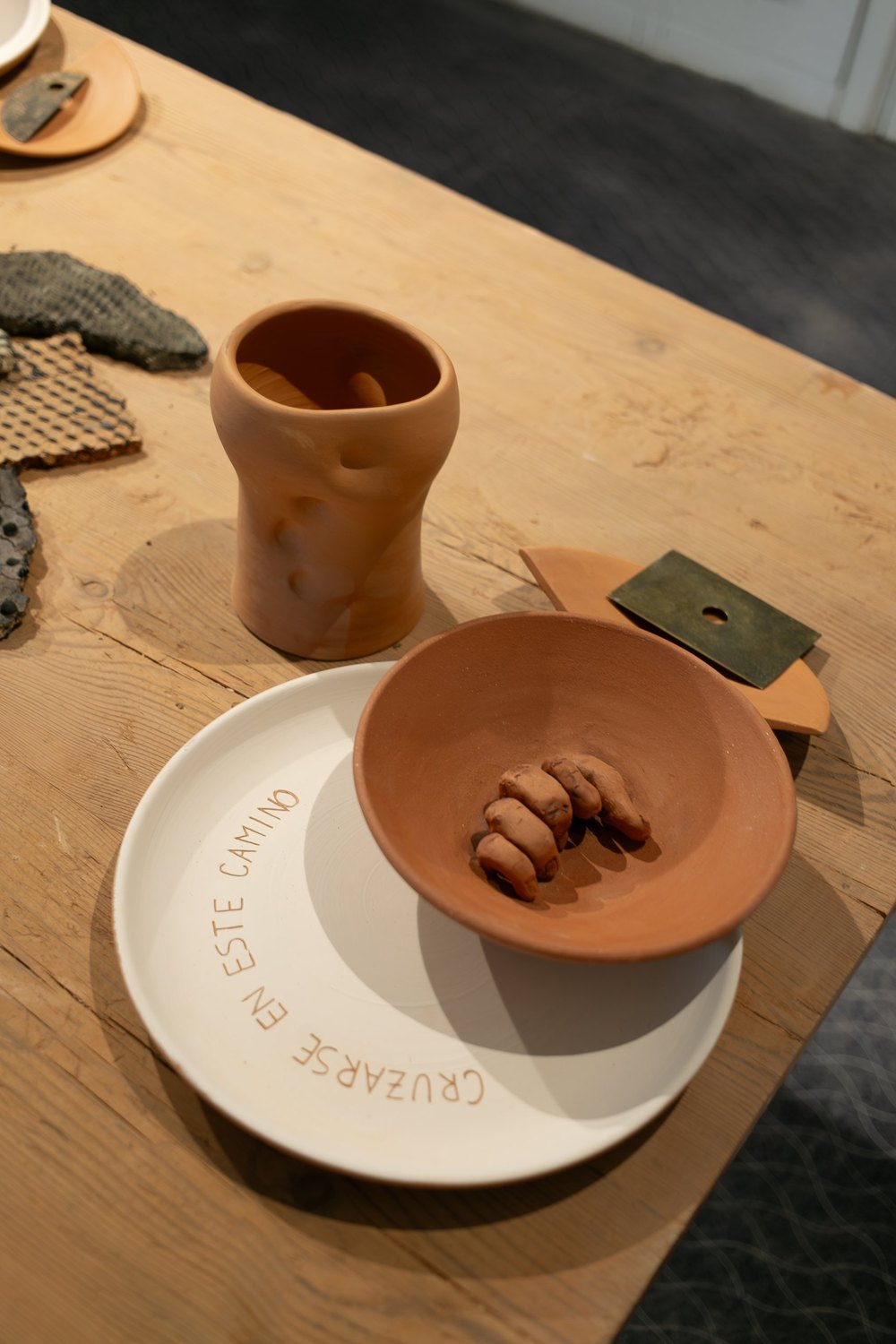
Comer de este cuerpo. Beber de esta fuente. Moldearse en este suelo. Cruzarse en este camino.
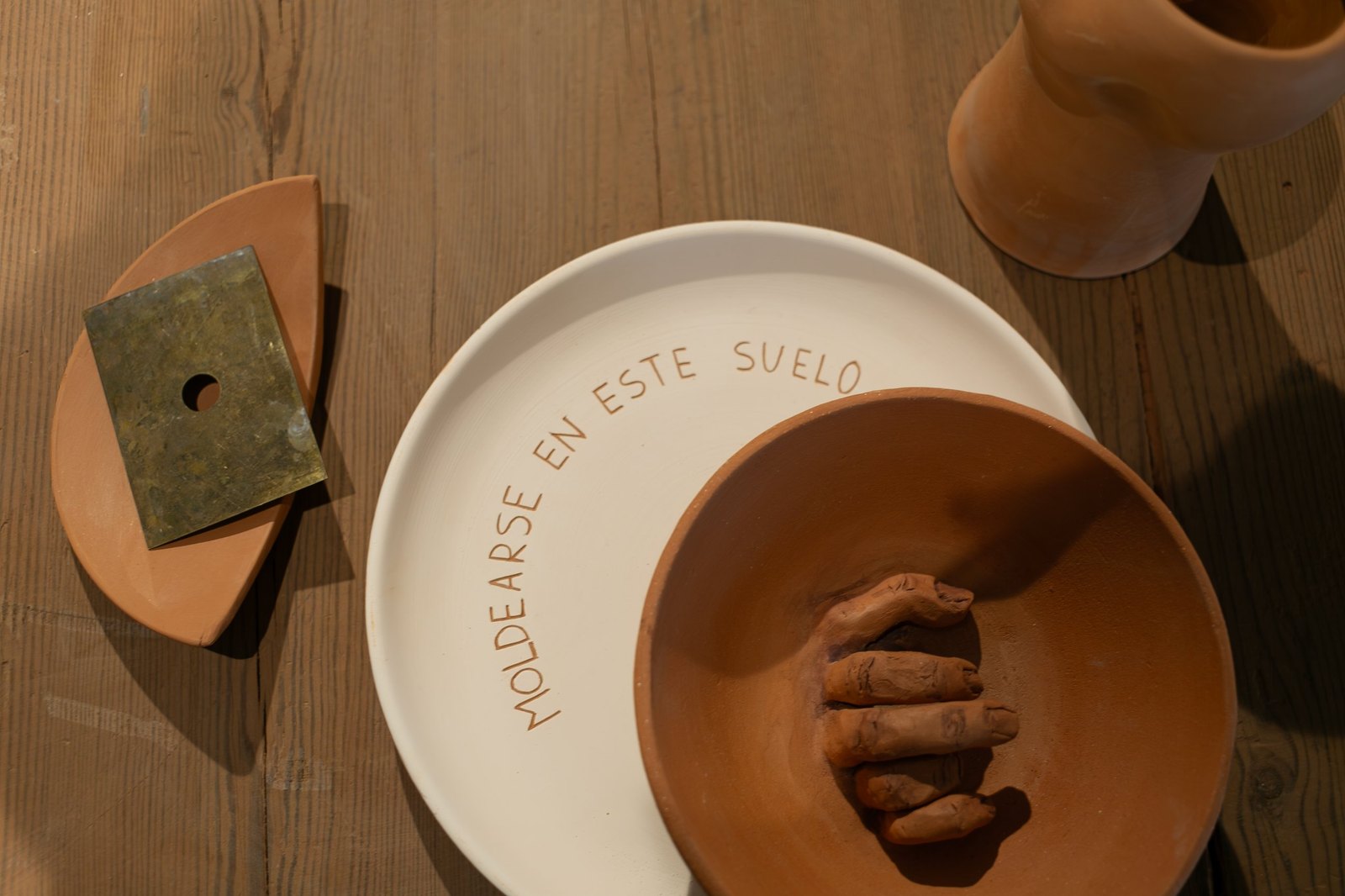
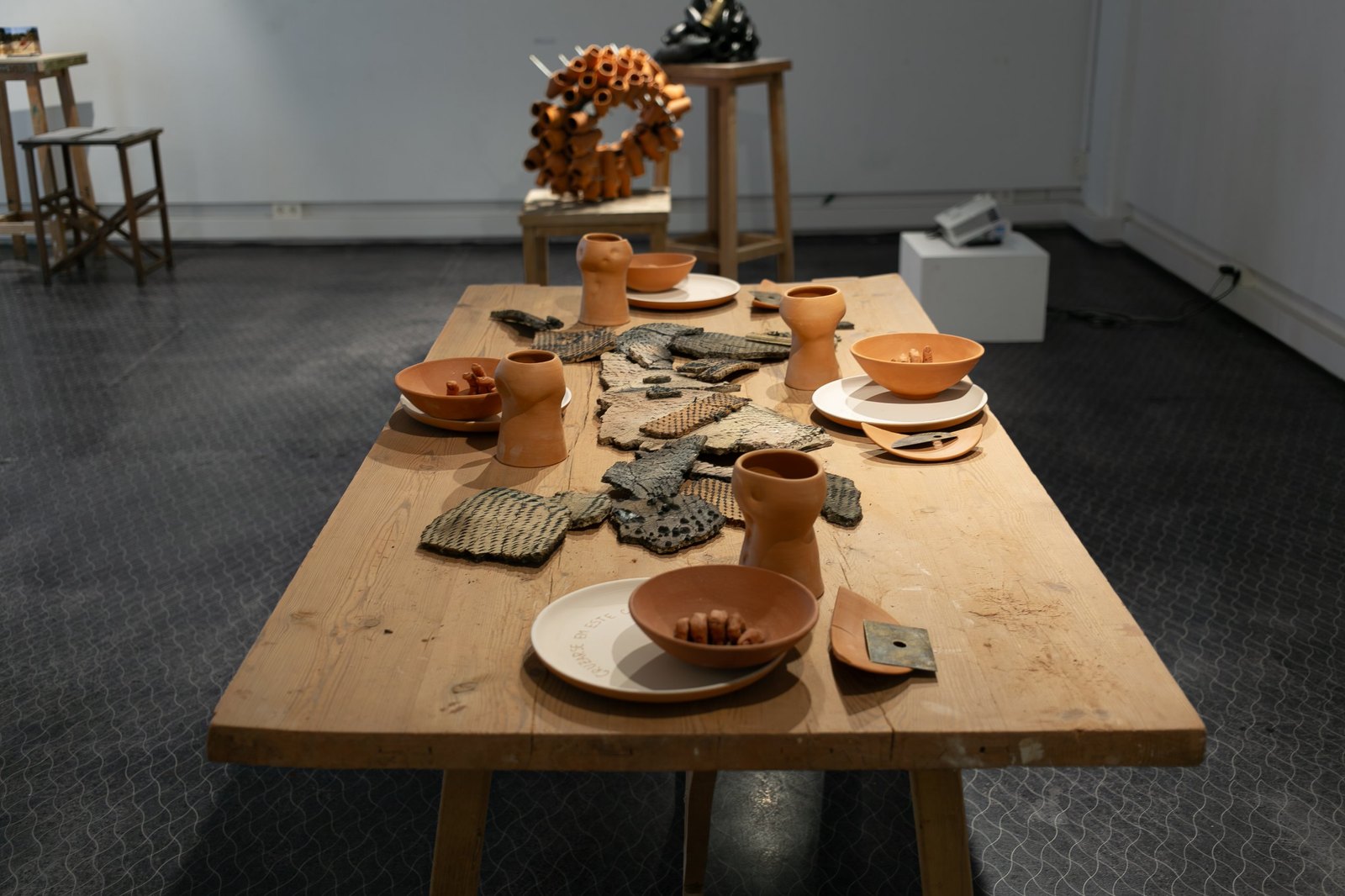
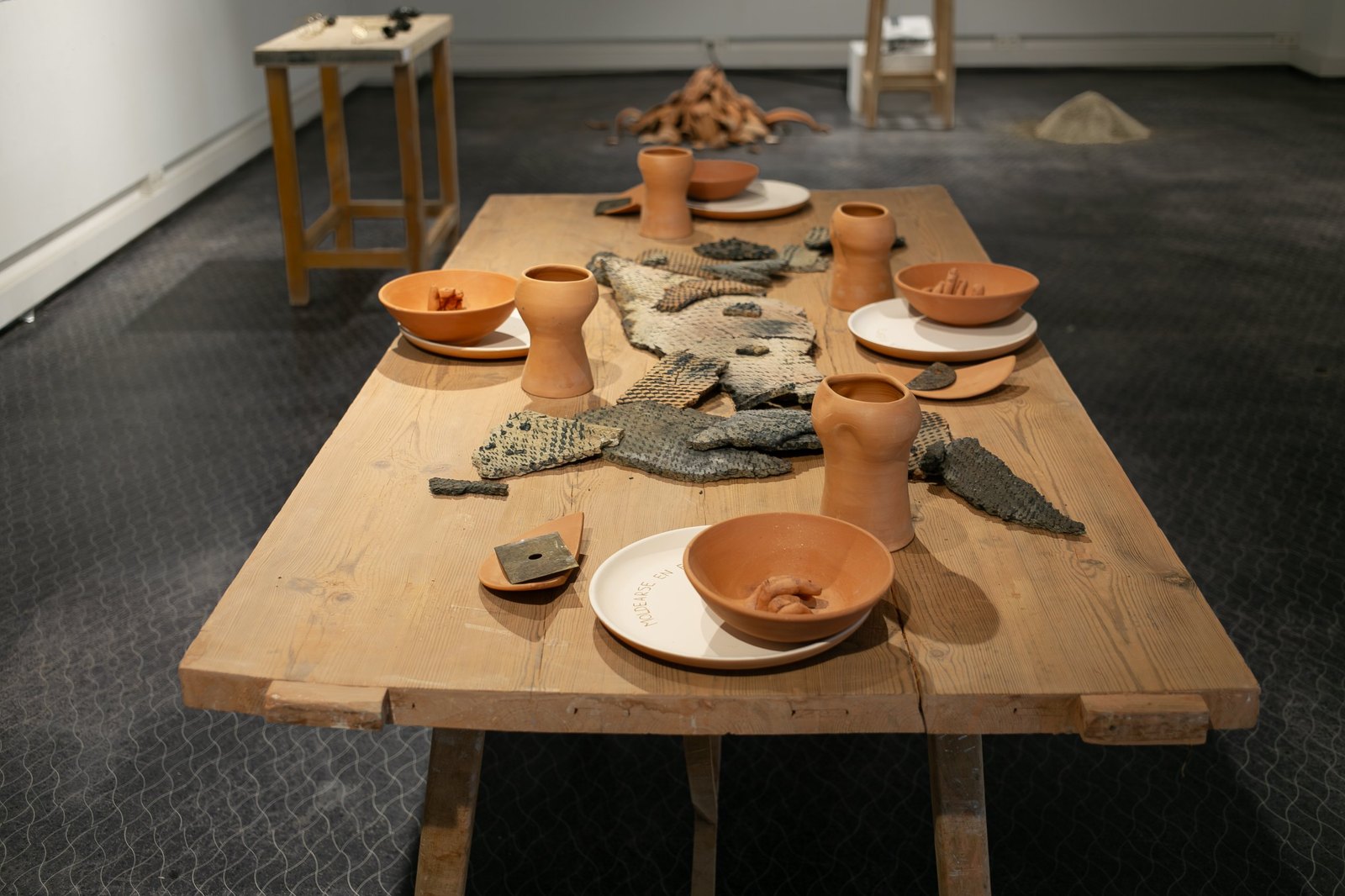
Set 3Four bowls from which hands emerge, in the position used to throw the bowls themselves; four remuia cups bearing, in low relief, the print of the hand that uses them; four plates carrying the phrases «Comer de este cuerpo.», «Beber de esta fuente.», «Moldearse en este suelo.» and «Cruzarse en este camino.» (Eat from this body. Drink from this spring. Mould oneself in this ground. Cross paths on this road.), arranged on a table. At the centre of the table the snake's skin is served.
This set began as a response to an absence: the living half of the territory, since the other typologies in the work come from Antiquity. A dream about serving food made me think about the act of feeding others and about the tableware set, so emblematic of La Bisbal's production. I began to think of the practice of making functional ware itself as an act of service and offering: the daily ritual of eating as a gesture that not only feeds the body but nourishes in communion, the idea of sitting at the table with others.
The bowls come directly from the gesture of the wheel: in each, a hand emerges from the clay, and the position of each hand reproduces the position it takes when throwing the bowl. The serving cups start from the shape of remuia vessels, which La Bisbal throwers traditionally use to hold water and slip beside the wheel. This piece came about while working in Marcos Pacheco's studio. Each cup keeps on its surface the mark of the hand that held and deformed it while the clay was still wet and soft. The plates were bought in La Bisbal and intervened with text.
The snake skins were another find that crossed the work: they are pieces of the shell of the kiln built for ReCuit 2026, a gathering that brought more than 60 ceramists to La Bisbal to share the building and firing of an ephemeral kiln. I had the joy of helping to build that kiln, whose walls, here turned into snakeskin, were made of high-fire grogged clay pressed onto the iron bedsprings of old beds and finished with a different sigillata on each of the three walls. The rubble was donated by Inga Freitas, Júlia Sangés and Toño Pérez. After the firing, those walls also became ceramic along with the pieces inside the kiln: the iron of the beds running through them twisted and gave way to the heat until it split them, leaving pieces of shell that keep on their surface the texture and melted remains of the old bed.
2026. Ceramics (terracotta), iron and brass.