The Fundamental Things
A group of four works from 2026: photographic series, porcelain pieces with typographic intervention and an installation.
1Viajes
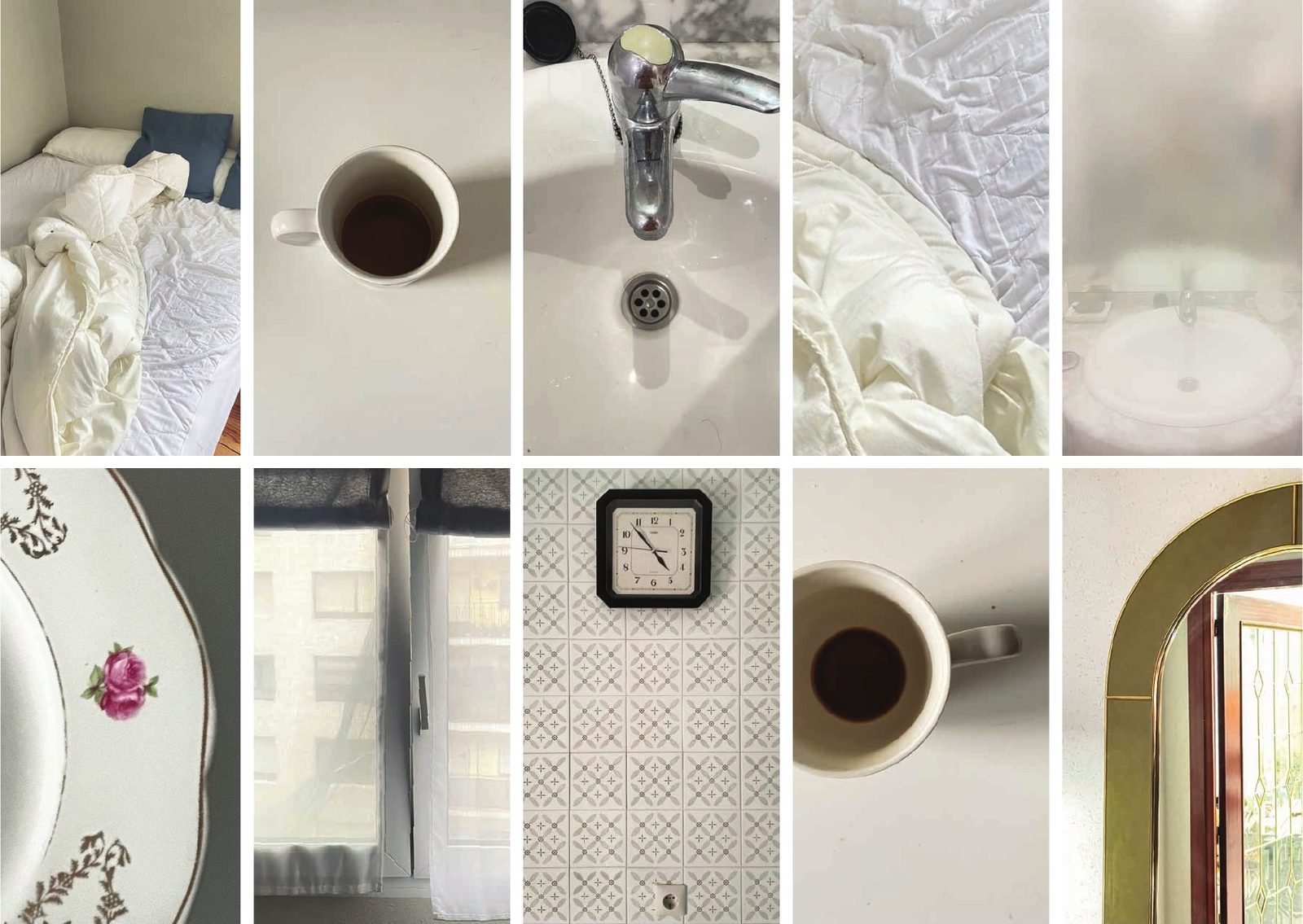
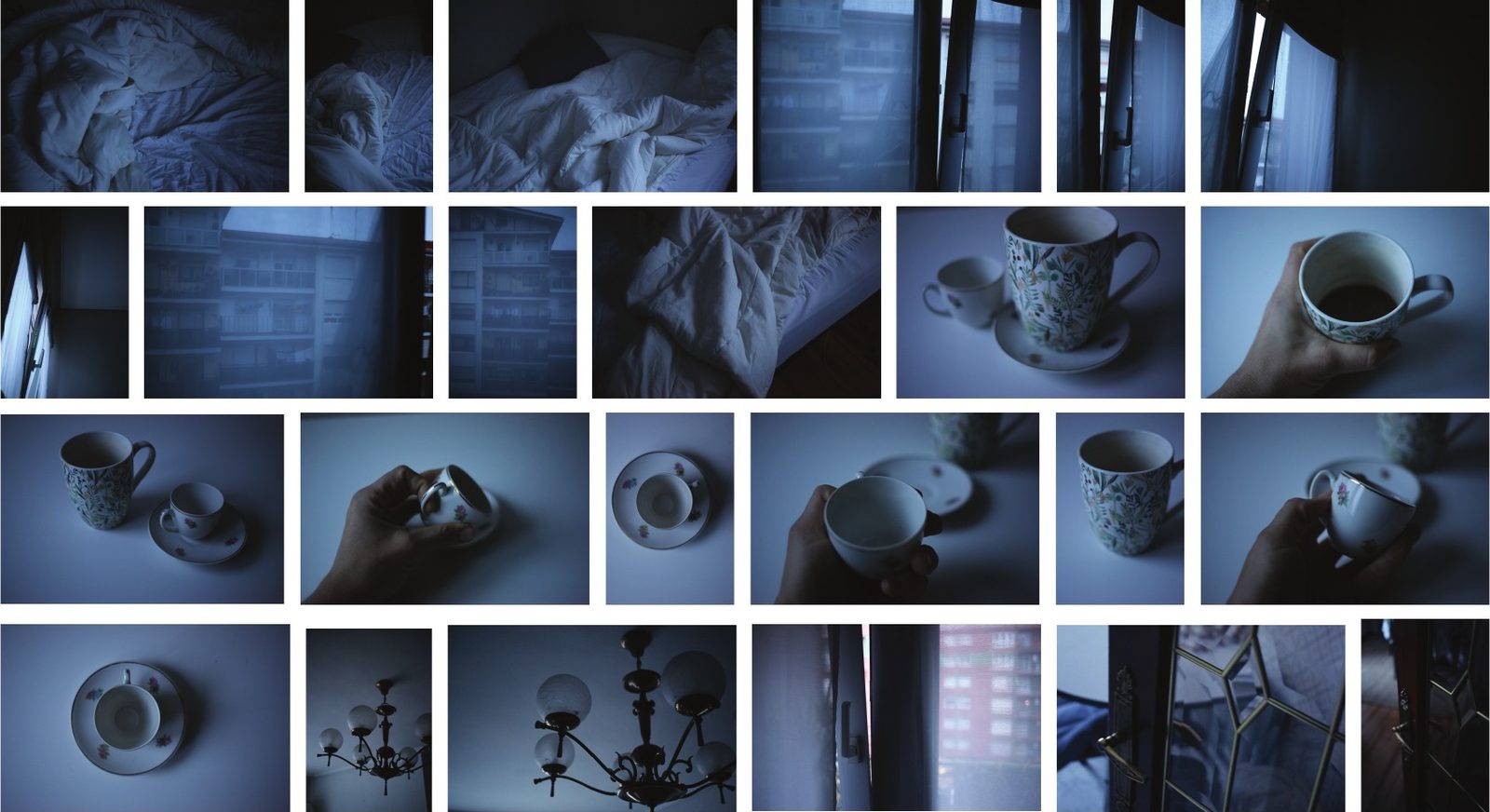
Acordar [Waking], Maneiras de sustentar o invisível [Ways of holding the invisible] and Break of dawn [Dawn] are photographic sequences that propose observing everyday gestures, such as waking up and pouring coffee, as a poetic and symbolic axis that evokes origin, silence, emptiness and disappearance, but also beginning, transformation and possibility.
The works are conceived as an intimate and constant presence, in which objects become a support for reflecting on time, use and memory. These photographic series thus take shape as a subtle choreography of repeated actions, a space of suspension in which objects, gestures and memories are transformed and reconfigured.
2As time goes by
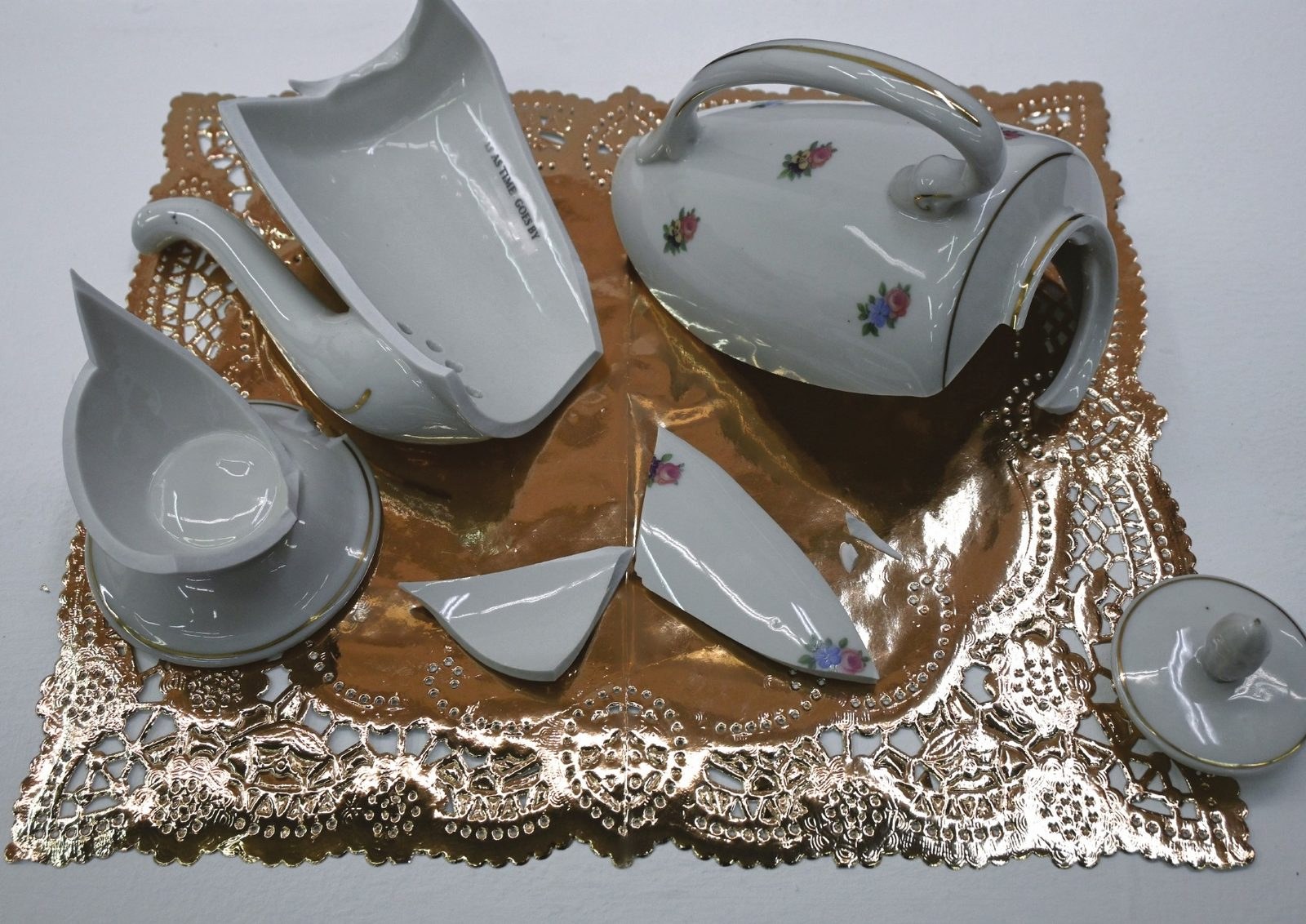
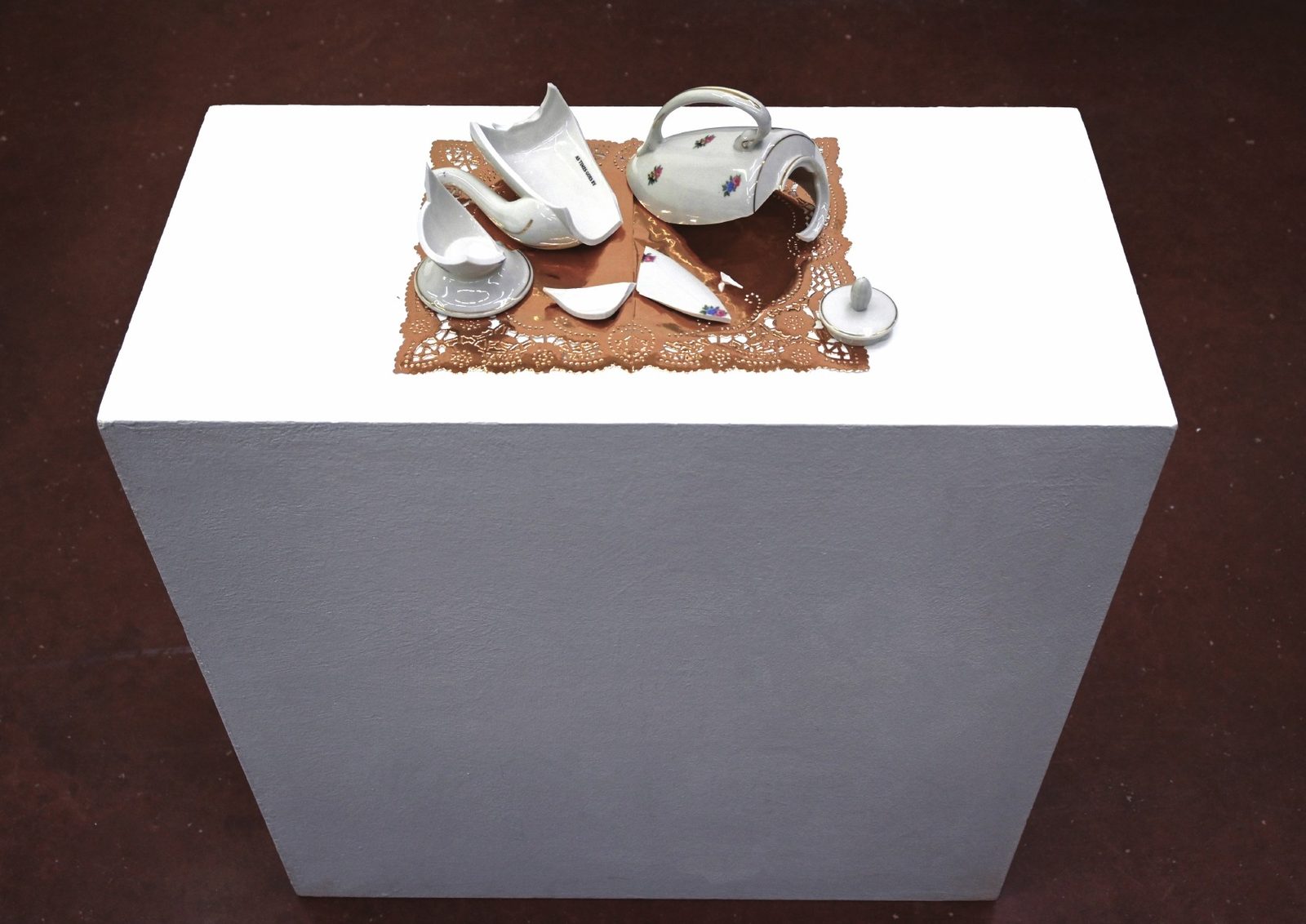
2026. Broken coffee pot with typographic intervention on a rectangular gold paper doily. Approx. 30 × 40 cm.
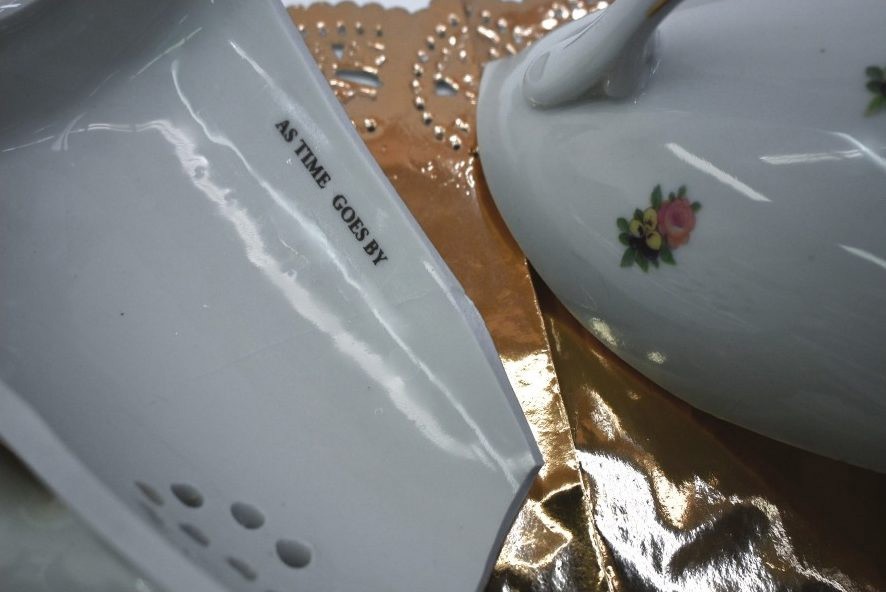
In this work, a broken coffee pot serves as a metaphor for the passing of time, which waits and transforms. Across its fragments, the lyrics of the song As Time Goes By run through the material like a continuous echo, marking a time that slips away but also insists on remaining.
The breaking of the object does not signal loss but opening: in the fragments, time is broken up and inscribed, revealing that what breaks can also be put back together in other ways. Between waiting and duration, the work suggests that remnants carry the possibility of re-creation, like memories that resist and take shape in the present.
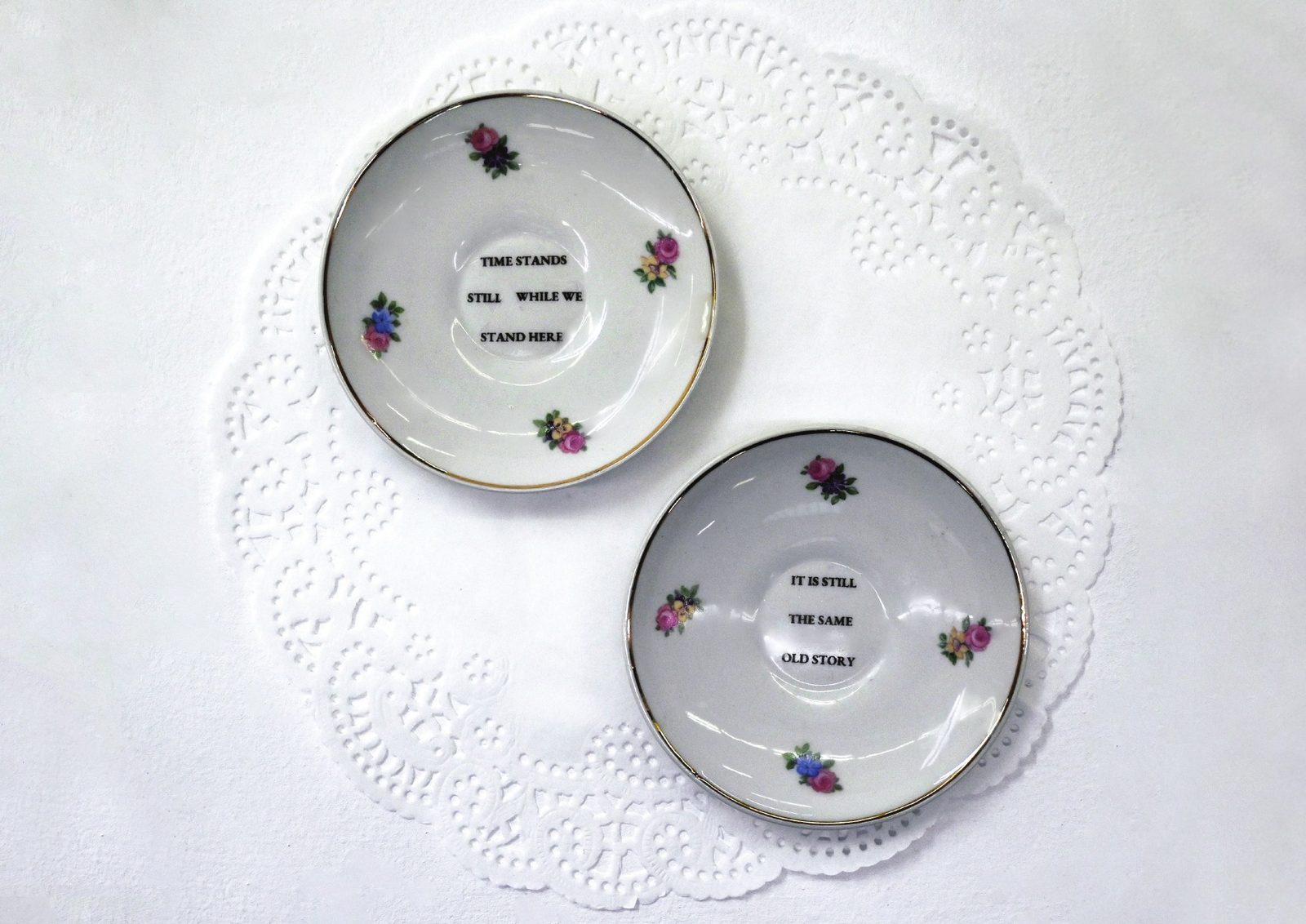
3Time stands still
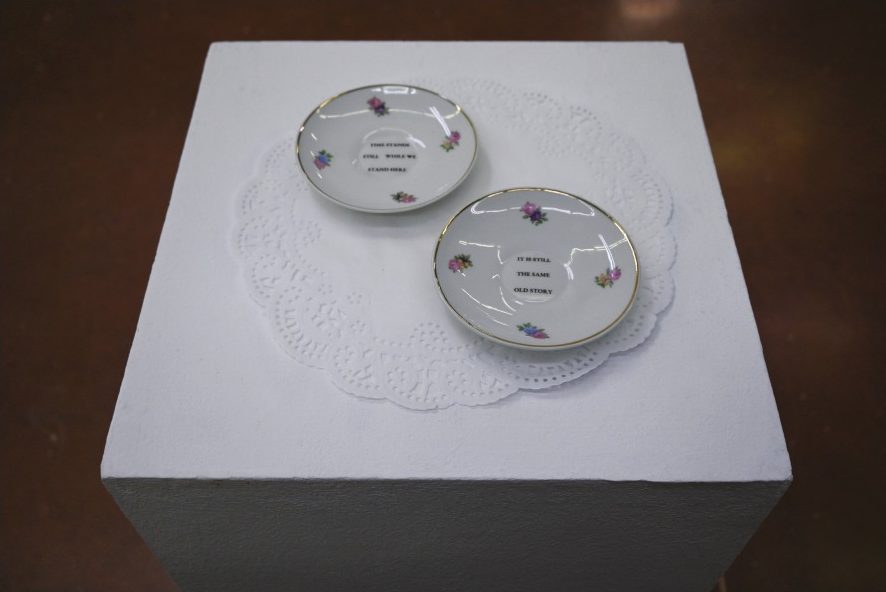
2026. Two small porcelain plates with typographic intervention on a round paper doily. Approx. 25 × 25 cm.
The words become delicate traces of memory, evoking presences and absences that run across generations. Between what has been lived, what is imagined and what is yet to come, the work builds a space where time folds back on itself and where things find ways to remain.
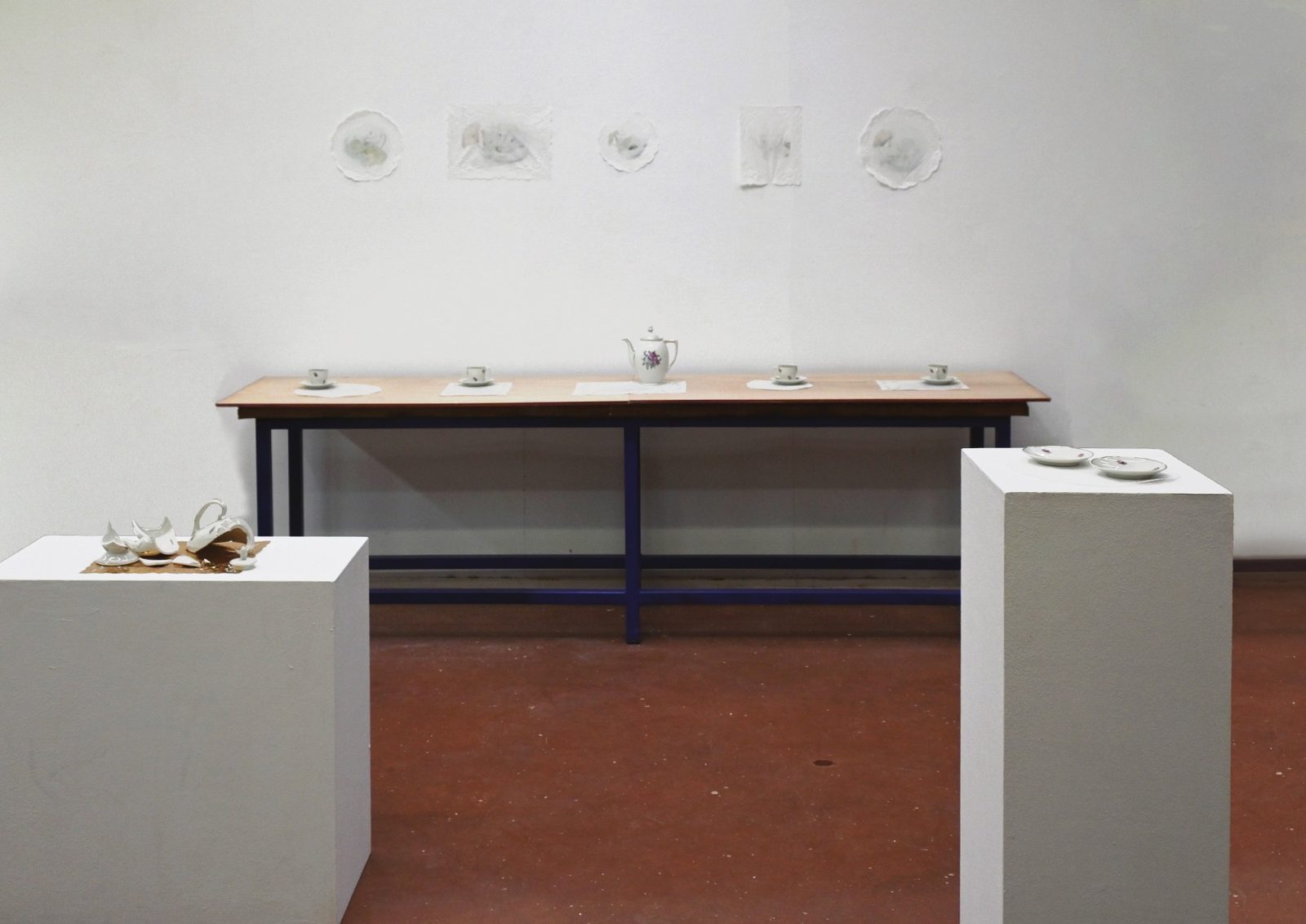
4El que no tiene memoria, se hace una de papel
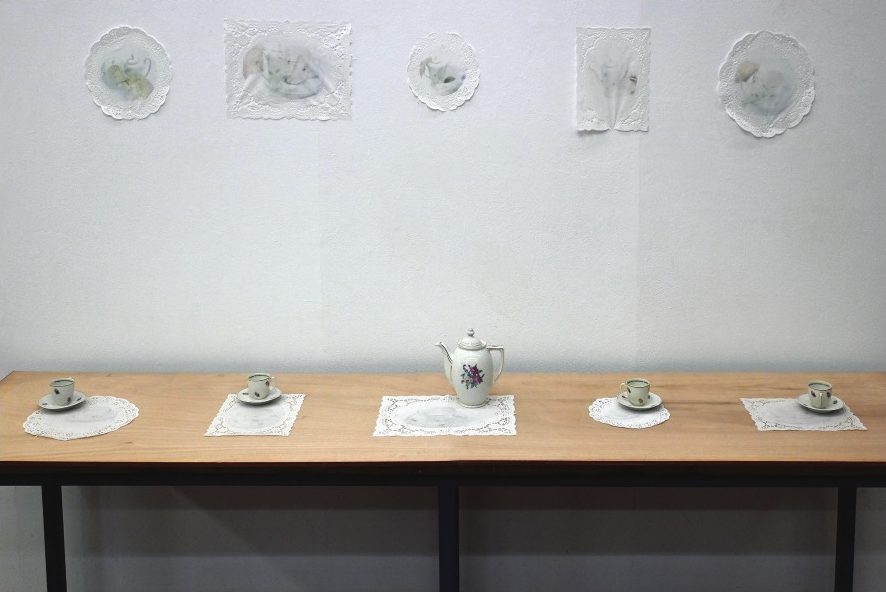
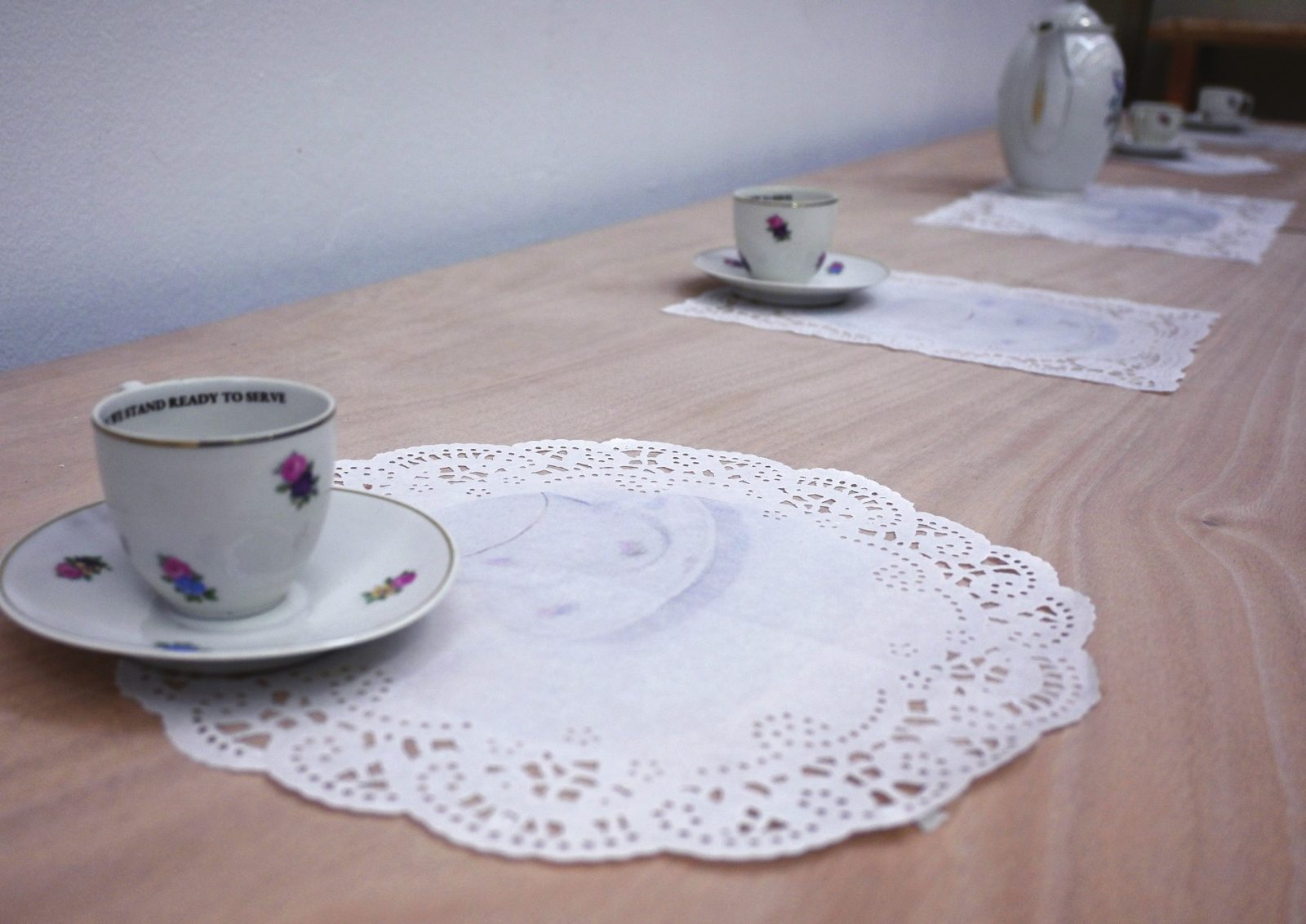
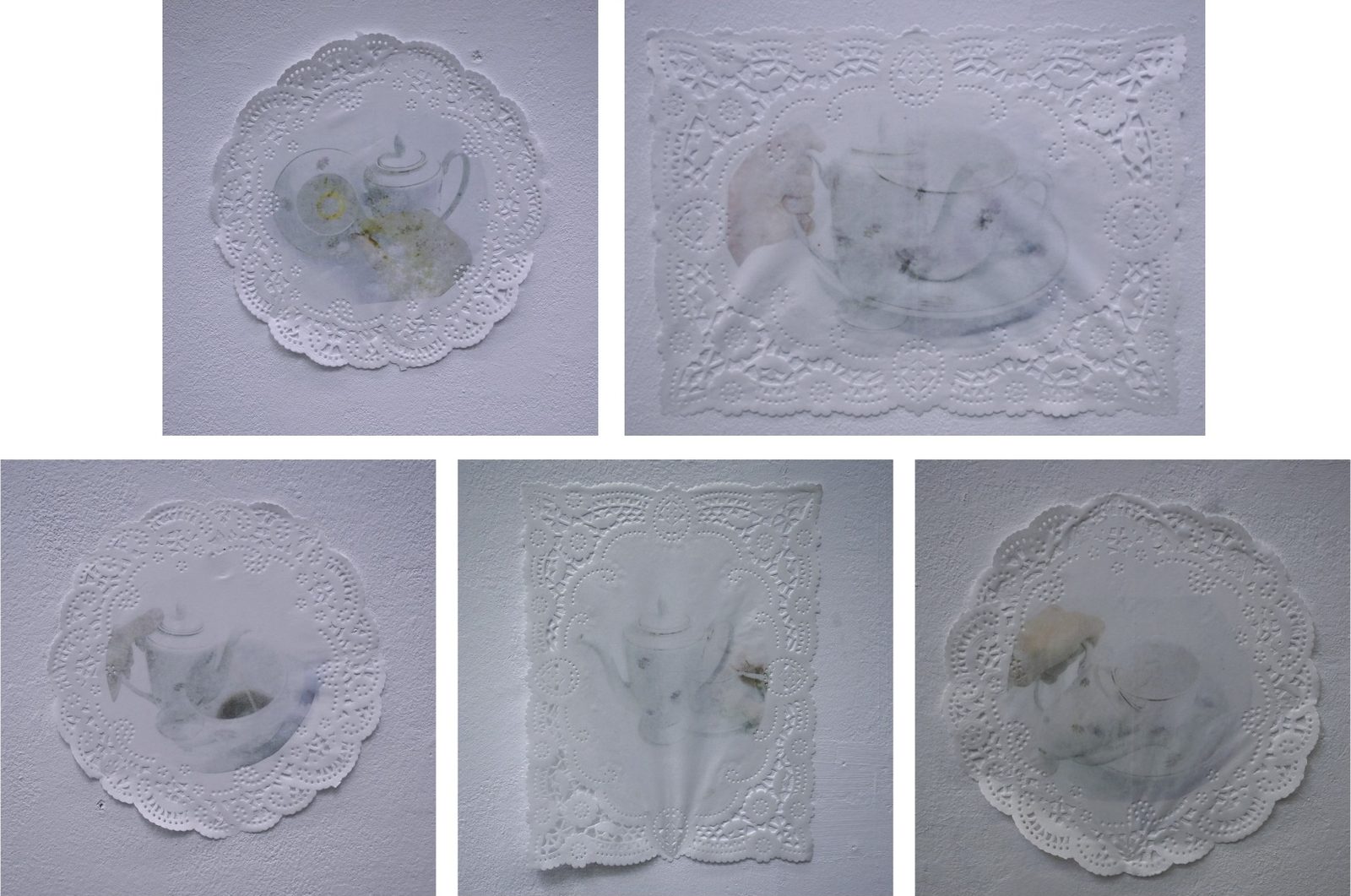
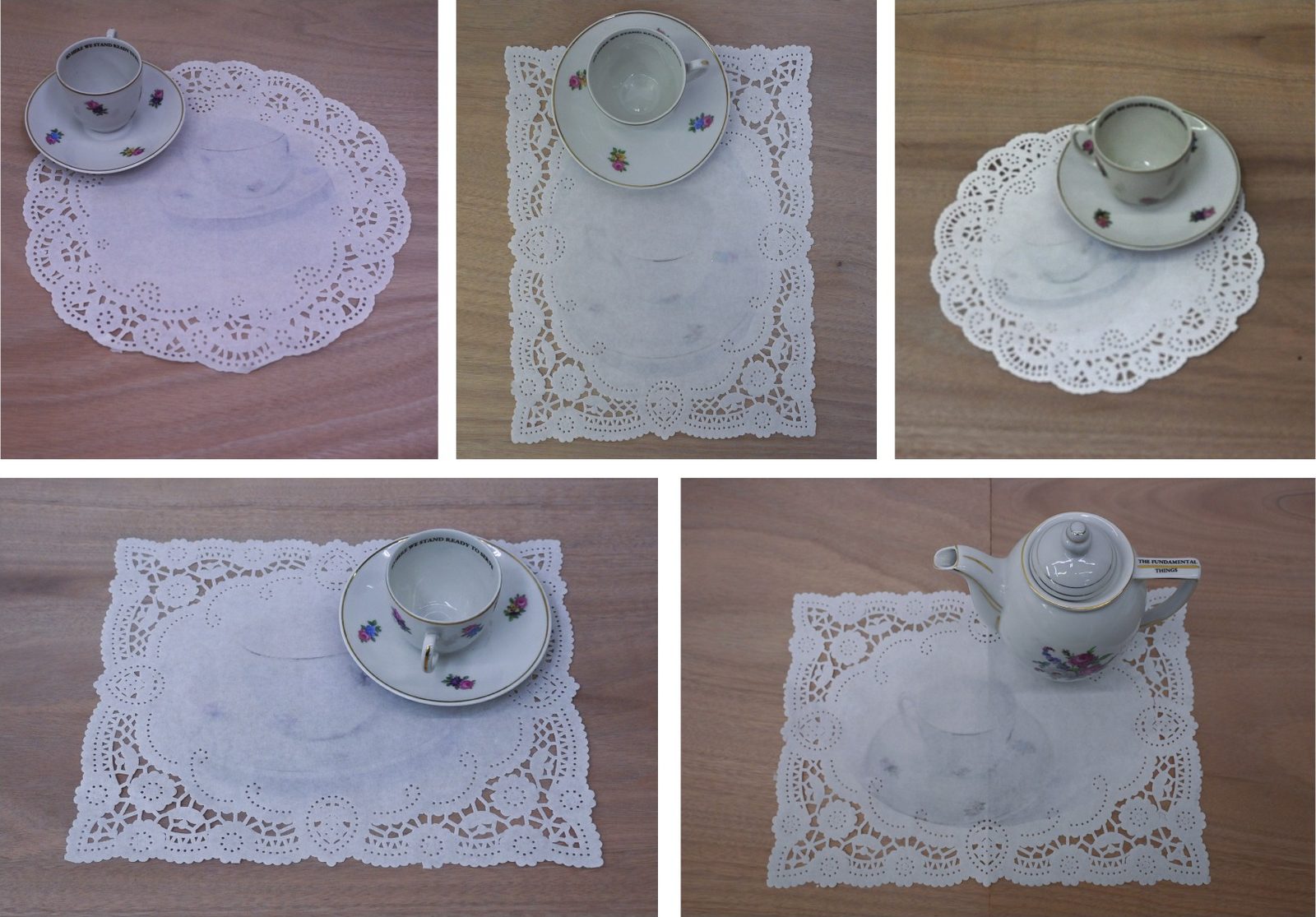
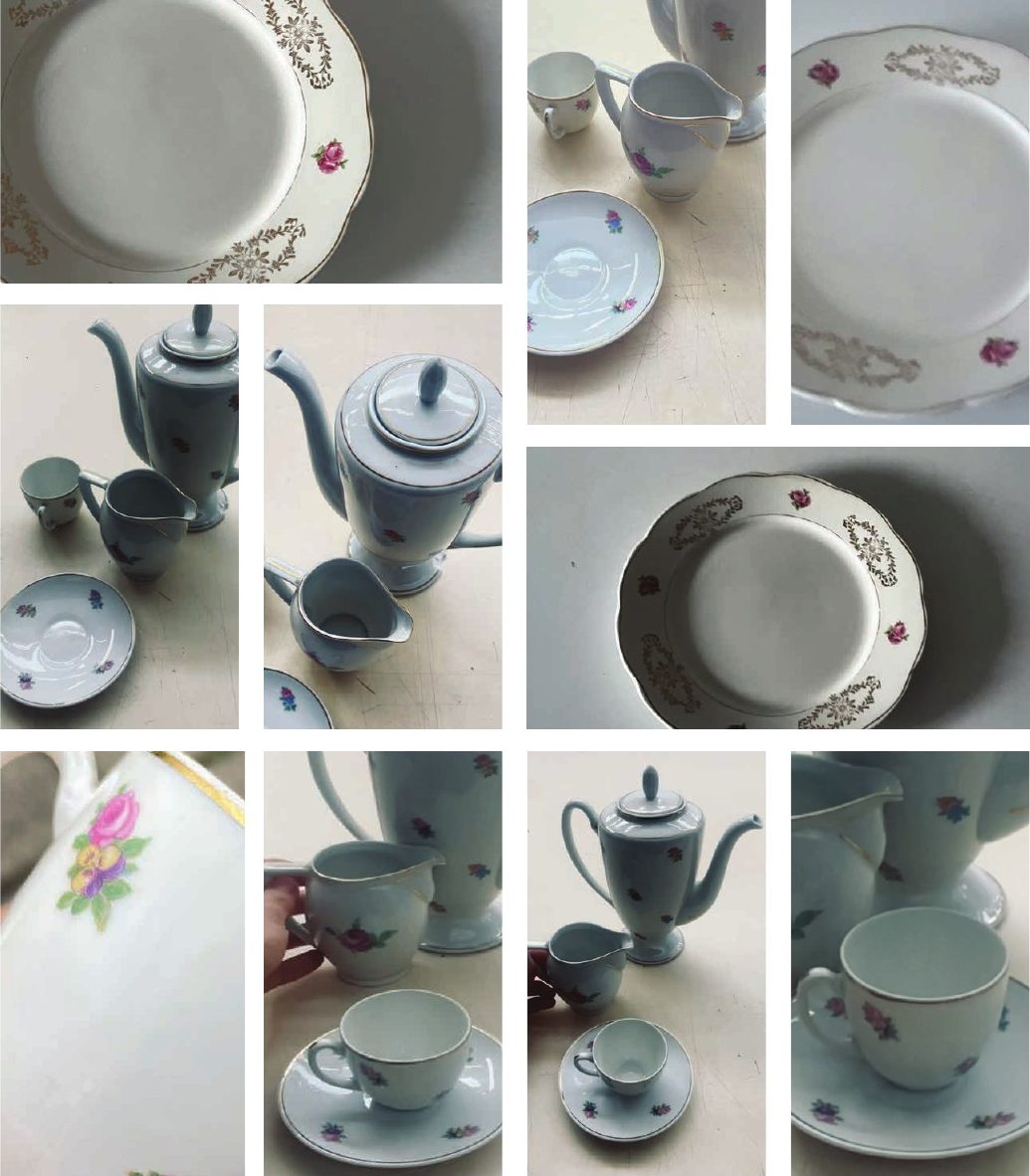
2026. Ten photographic prints on paper doilies and a porcelain coffee set with typographic decals.
Its title is taken from Gabriel García Márquez’s Love in the Time of Cholera; the piece comes from the first memory of a dream. The artist never met her maternal grandmother, Renata, who died before she was born, but found her in a dream during her childhood. In the dream, she arrives at a square and climbs a staircase that leads to a dining room, where her grandmother welcomes her. Sitting together, they share an afternoon coffee, a simple gesture that becomes encounter, welcome and recognition. The grandmother tells her of her joy at meeting her and of the happiness of sharing that moment suspended in time.